Tesco Lemon Concentrated Washing Up Liquid
Tesco
This Safety Data Sheet covers Tesco Lemon Concentrated Washing Up Liquid, manufactured by Tesco. It complies with GHS/CLP regulations. Available in English. Last revised 30 November 2007.
27476-87-0,61827-42-7,61701-31-9,68603-42-9,9004-82-4,8711-69-9
🇬🇧English
GHS/CLP
30 November 2007
Safety Information
Key Hazards
- May cause moderate irritation to eyes upon contact
- Frequent or prolonged skin contact can cause irritation and skin defatting
- Ingestion of significant quantities may cause nausea and vomiting
- Contains surfactants harmful to aquatic organisms
First Aid Guide
Rinse eyes immediately with plenty of water for at least 10 minutes while holding eyelids open. Seek medical advice if redness or irritation persists.
Wash affected area thoroughly with soap and water.
Inhalation risk is minimal as the product is a liquid. If exposure occurs, move to fresh air.
Rinse mouth with water. Do not induce vomiting. Seek medical advice immediately.
Protection Needed
Not required during normal use
Not required during normal use, but avoid prolonged or repeated contact with the concentrate
Not required during normal use
Not required during normal use, but avoid prolonged or repeated contact. People with sensitive or damaged skin should avoid contact.
Physical Properties
Safe Handling
- Maintain good occupational and personal hygiene
- Avoid contact with skin and eyes during handling
- Wash hands thoroughly after use
- Keep away from eyes
- Use only as directed on product packaging
Store in the original container in a cool place away from extreme temperatures. Keep out of reach of children.
Trusted by over 685,800+ users
in over 135 countries, from individual practitioners to global enterprises

Spot SDS Changes. Simplify Your Audits.
Quickly compare the old and new versions of your SDS side by side, highlight updates, and keep track of changes with clear insights.
Continue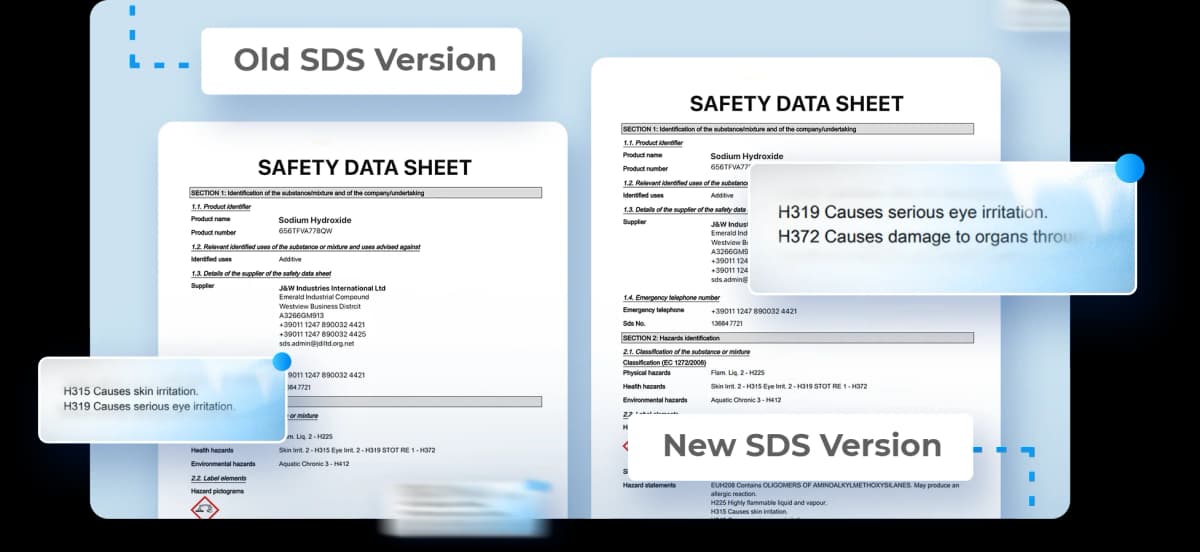
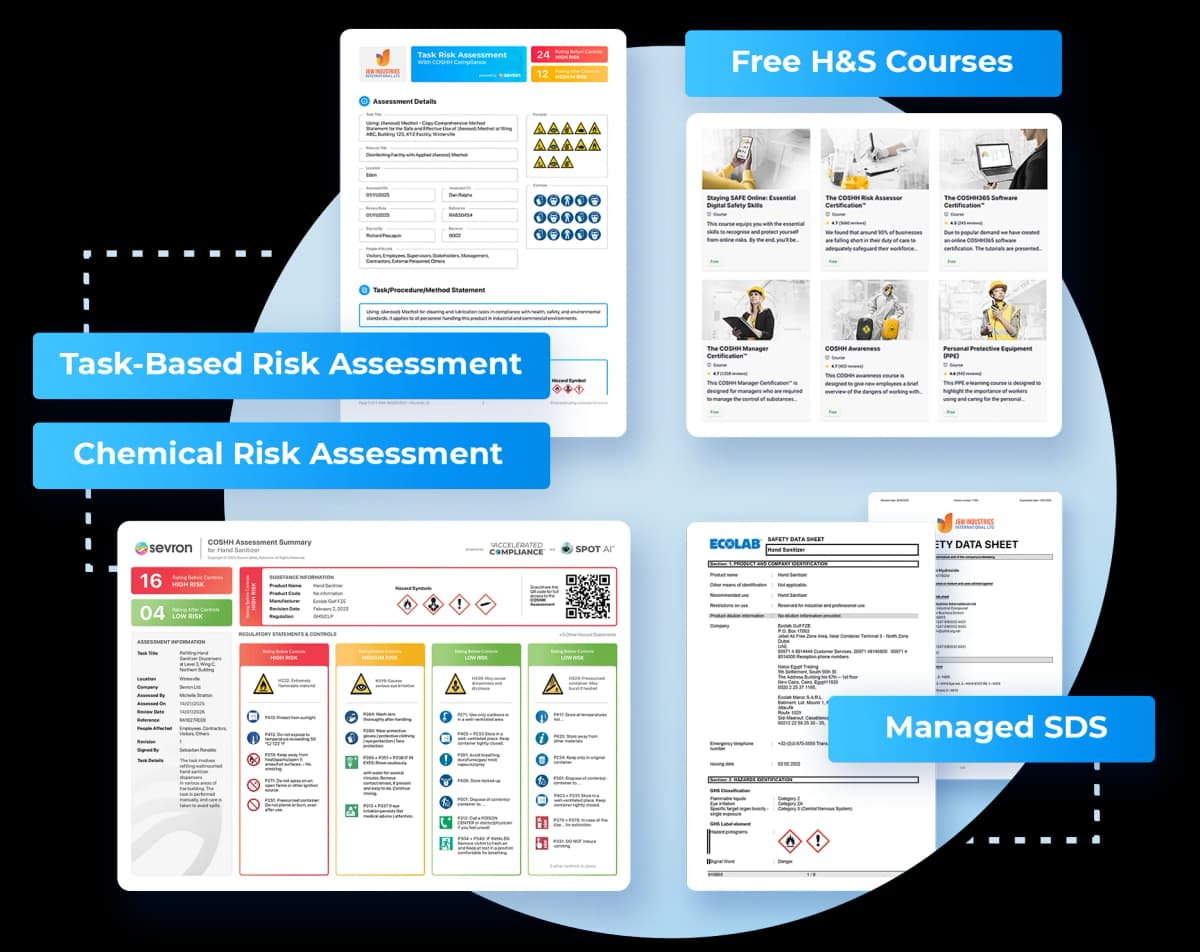
Small Business Bundle
Big companies have safety teams-you don't. But you still have the same legal duty of care. That's why we built the Small Business Bundle.
It's free and gives you risk assessments, SDS management, and expert training-the same tools big businesses use, made simple for you. No cost. No hassle. Just compliance made easy. You're welcome.
Create a COSHH Risk Assessment
in Just 5 Simple Steps
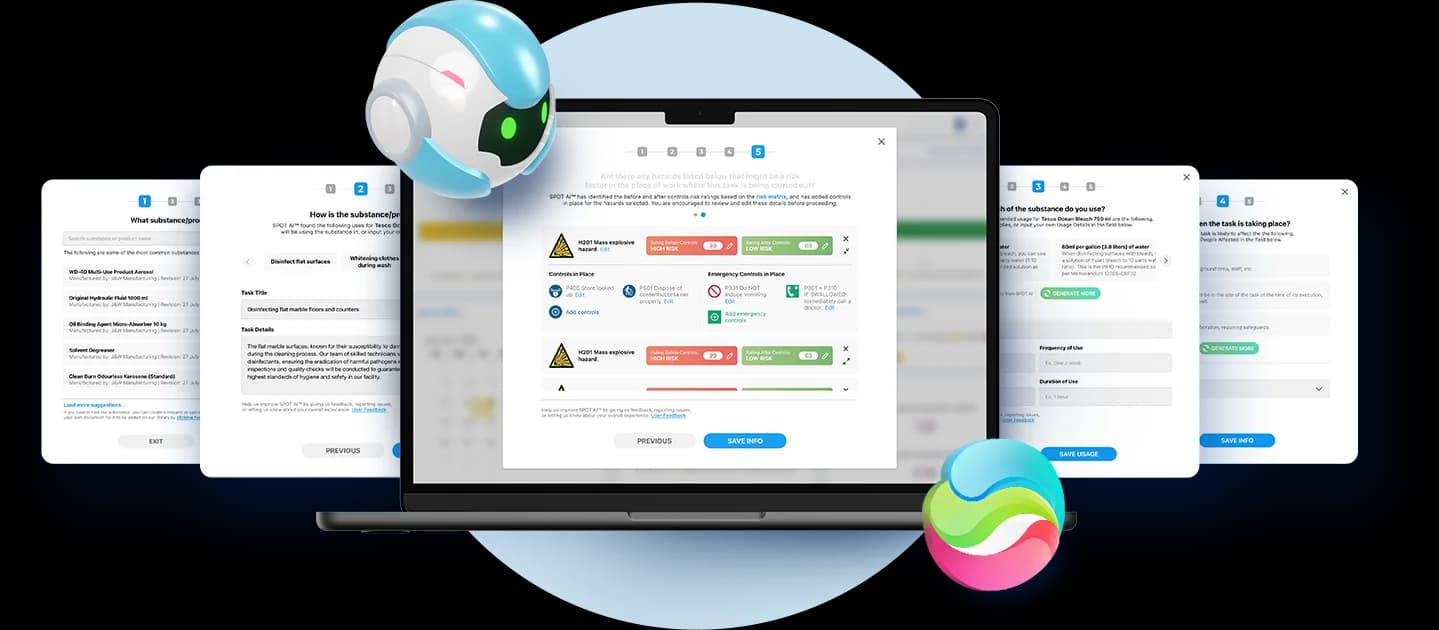
Sevron's 5-Step Wizard creates fully compliant COSHH risk assessments in 60 seconds with AI-powered automation.
Connected to real-time tracking, updated safety data sheets, and a comprehensive dashboard for full audit readiness, it's part of a complete COSHH management software system trusted by industry leaders. No shortcuts, no barriers, no waiting. Just effortless chemical safety that you can start using right here, right now.
Frequently Asked Questions
What is a Safety Data Sheet (SDS)?
A Safety Data Sheet is a standardised document that provides detailed information about a chemical product’s hazards, safe handling procedures, storage requirements, and emergency measures. Under UK REACH and CLP regulations, suppliers must provide an SDS for hazardous substances to ensure workers can handle them safely.
How often should Safety Data Sheets be updated?
Safety Data Sheets should be reviewed and updated whenever new hazard information becomes available, when regulations change, or when the product formulation changes. Suppliers must update SDSs promptly and provide revised versions to customers. As a best practice, review your SDS library at least annually to ensure all documents are current.
Who is responsible for maintaining Safety Data Sheets?
Employers are legally responsible for obtaining and maintaining current SDSs for all hazardous substances used in their workplace. While suppliers must provide SDSs, employers must ensure they’re accessible to workers, kept up-to-date, and used to inform COSHH risk assessments and safe working procedures.
What are the 16 sections of a Safety Data Sheet?
The 16 mandatory SDS sections are: (1) Identification, (2) Hazard identification, (3) Composition/ingredients, (4) First-aid measures, (5) Fire-fighting measures, (6) Accidental release measures, (7) Handling and storage, (8) Exposure controls/PPE, (9) Physical properties, (10) Stability and reactivity, (11) Toxicological information, (12) Ecological information, (13) Disposal, (14) Transport, (15) Regulatory information, and (16) Other information.
How do I find the right Safety Data Sheet for a product?
Search using the exact product name as shown on the container, the manufacturer name, and optionally the CAS number for precise identification. Sevron’s SDS search tool lets you search millions of SDSs by product name, manufacturer, or CAS number, with multi-language options and instant PDF access.
What’s the difference between an SDS and an MSDS?
MSDS (Material Safety Data Sheet) was the older format with varying structures across countries. SDS (Safety Data Sheet) is the globally harmonised format introduced under GHS with a standardised 16-section structure. Since June 2015, all safety data sheets in the EU/UK must follow the SDS format. The terms are often used interchangeably, but SDS is the current standard.
How should Safety Data Sheets be stored and made accessible?
SDSs must be readily accessible to all workers who handle hazardous substances. Store them in a central location—whether physical folders or digital systems—where workers can quickly access them. Digital SDS management systems like Sevron allow instant search and retrieval, automatic updates, and access from any device.
Can I use a Safety Data Sheet from another country?
SDSs must comply with the regulations of the country where the substance is used. UK/EU SDSs follow CLP regulation formatting, which may differ from US OSHA requirements. Always use region-appropriate SDSs and check that the language, hazard classifications, and regulatory information match UK requirements.
Related Pages
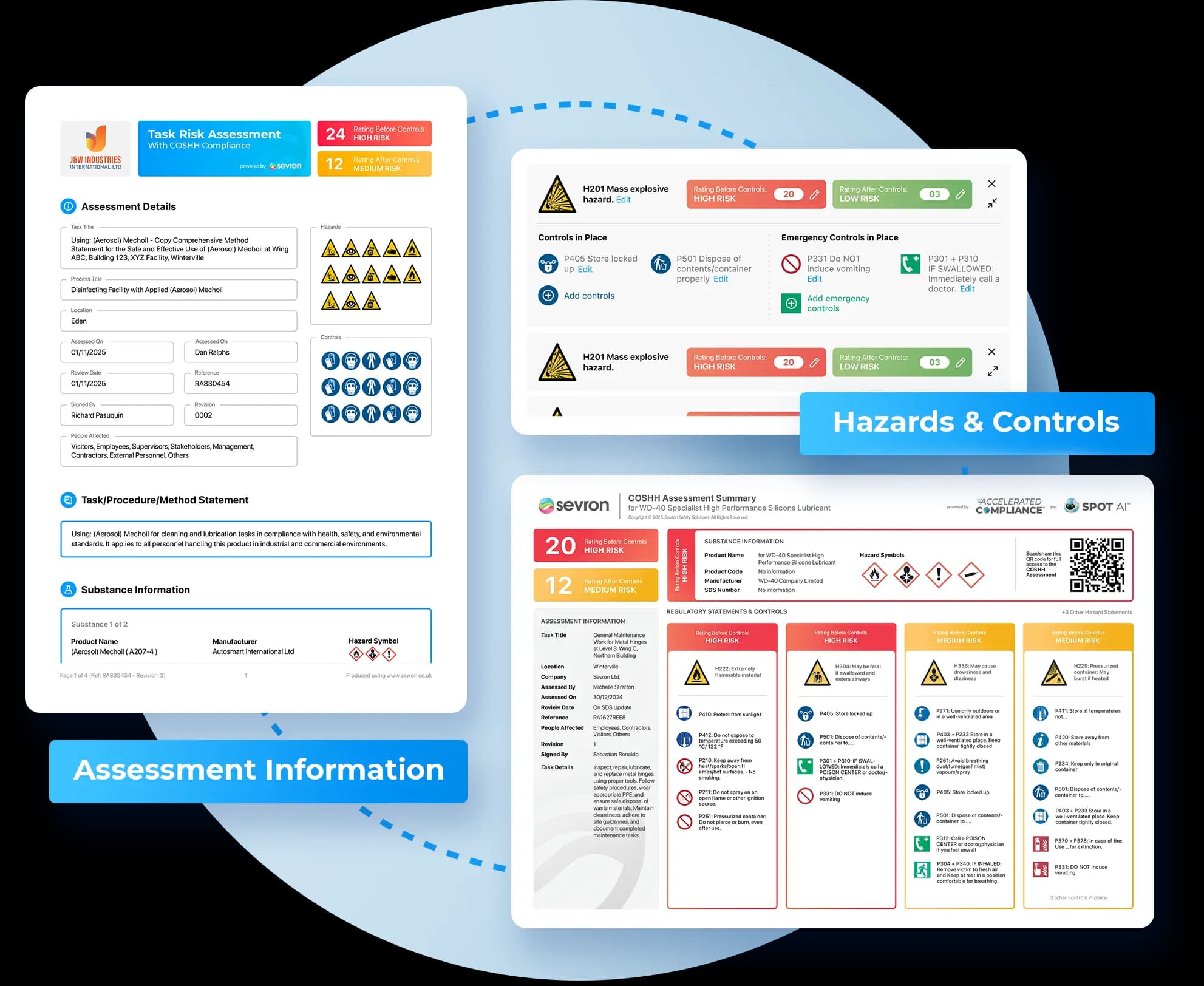
Chemical Management
Complete chemical management platform with COSHH assessments, SDS library, and compliance tracking.
COSHH Assessments
Create compliant COSHH assessments in minutes with AI-powered hazard identification.
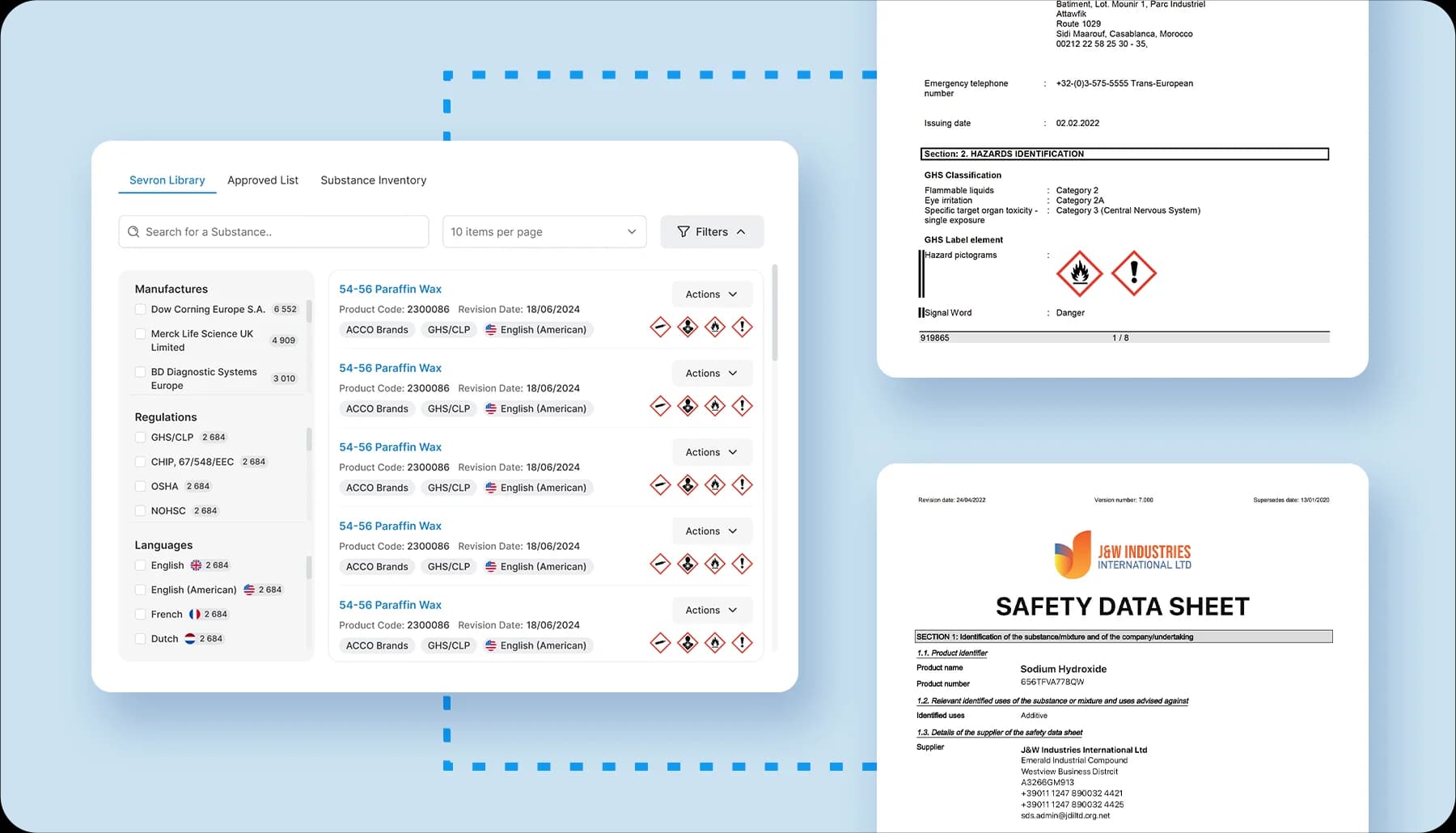
SDS Search
Find safety data sheets instantly from our database of millions. Free to use.
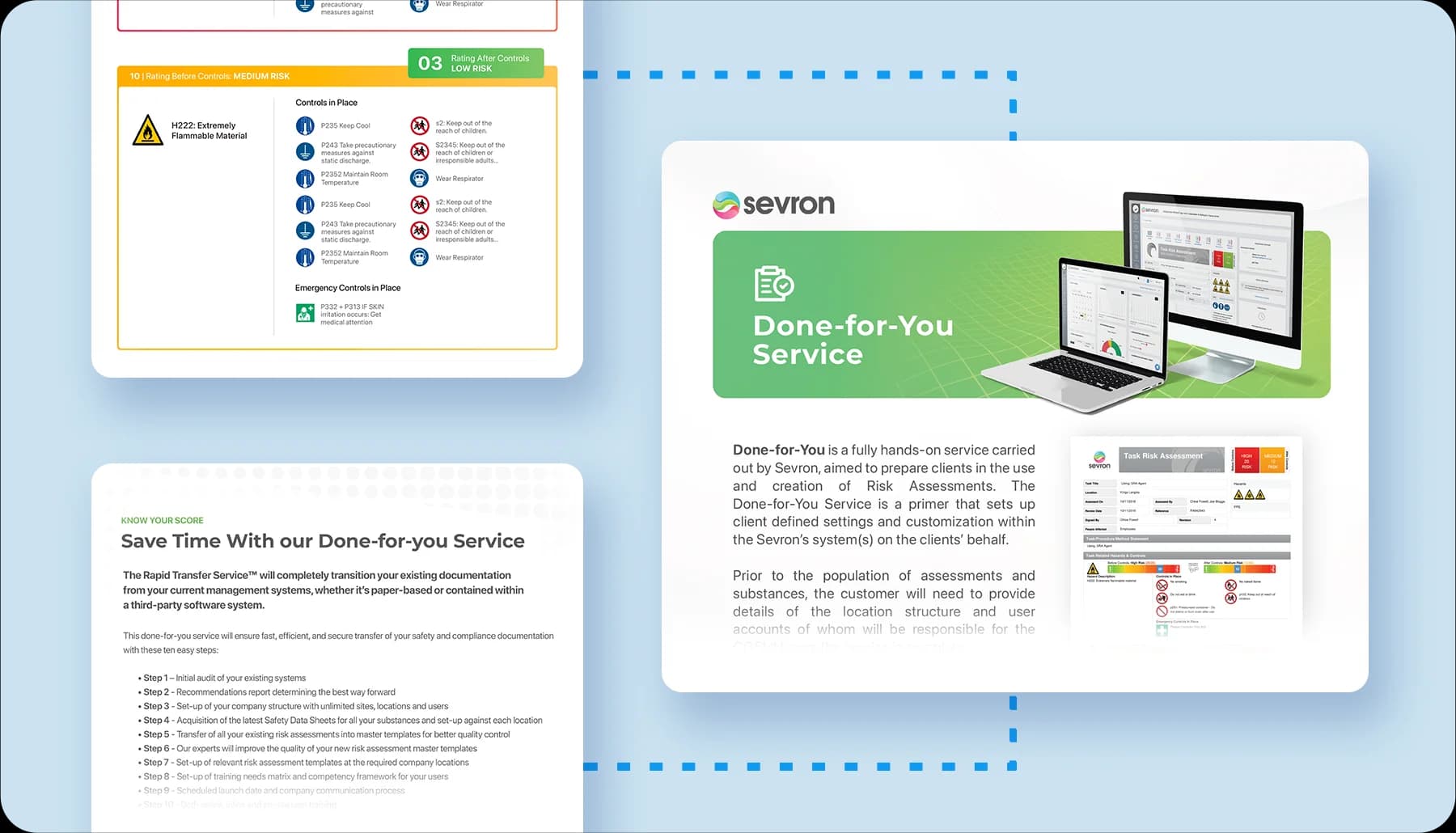
Done-For-You
Let our experts handle your compliance documentation and train your team.